
This year, the Immunology Society of Slovenia celebrates 50 years of activity. We marked this important anniversary on 15 April with a commemorative ceremony, at which the Society’s President, Prof. Vladka Čurin Šerbec, recalled the key milestones and the people who, over five decades, have helped shape the Society and contributed to the development of immunology in Slovenia.
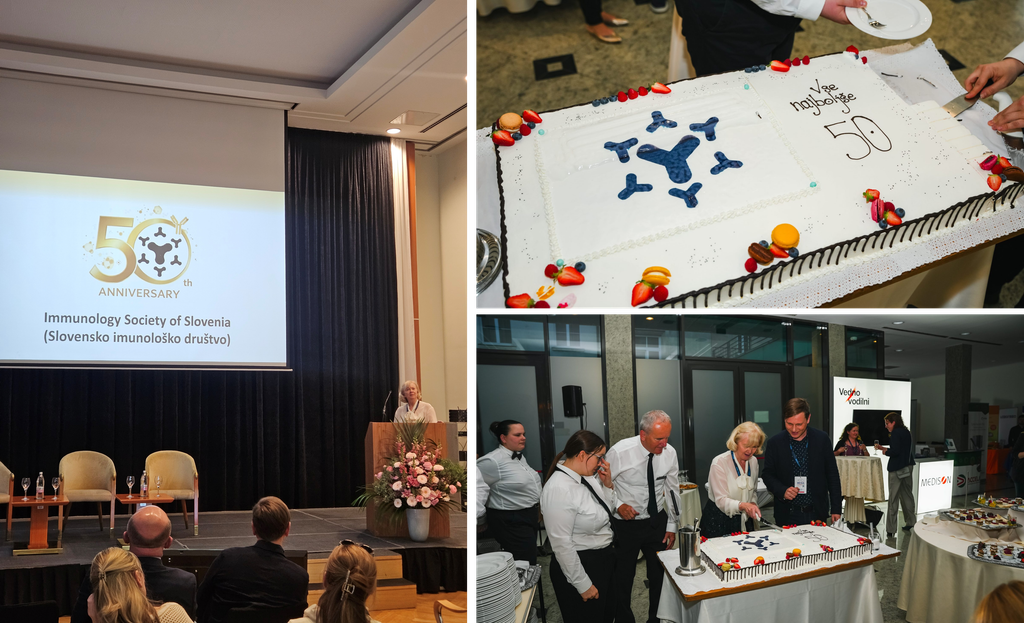
Ceremony marking the Society’s 50th anniversary
The beginnings of the Immunology Society of Slovenia
The Immunology Society of Slovenia was founded on 28 October 1976 on the initiative of Prof. Stanko Banič, who also became its first President. The Society’s first Secretary was Assoc. Prof. Marjan Vozelj, and the Society was officially registered in 1977.
At the time of its establishment, it brought together 22 founding members from nine Slovenian research and healthcare institutions: the Institute of Microbiology, University Medical Centre Ljubljana, Golnik Hospital, Dr Peter Držaj Hospital, the Institute of Oncology Ljubljana, the Division of Paediatrics at University Medical Centre Ljubljana, Blood Transfusion Centre of Slovenia and the National Institute of Chemistry, and the Jožef Stefan Institute. Its fundamental aim was to promote the development of basic immunology and its integration with clinical immunology. During its first decades, the Society operated within the Federation of Yugoslav Immunological Societies (FYIS) and, through it, was also affiliated with the European Federation of Immunological Societies (EFIS) and the International Union of Immunological Societies (IUIS).
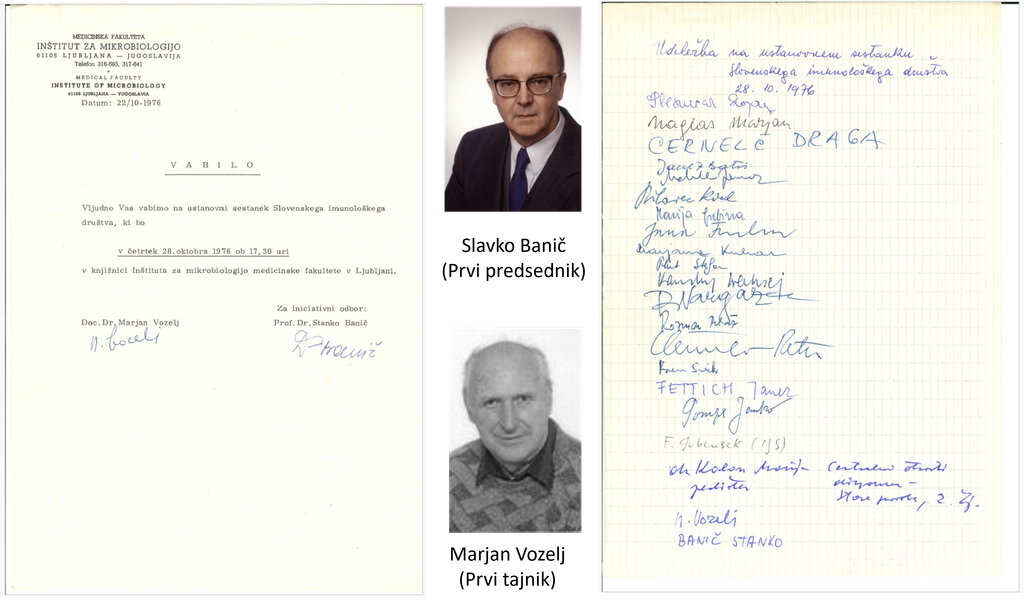
Founding of the Immunology Society of Slovenia
A new era after Slovenia’s independence
In 1989, Prof. Vladimir Kotnik took over the leadership of the Society. His long-standing presidency encompassed an important turning point for both Slovenia and the Society: the country’s independence and the establishment of the Immunology Society of Slovenia as an independent national professional society.
At the time of Slovenia’s independence, the Society had 74 members, and in 1992 it ceased operating within the Federation of Yugoslav Immunological Societies. This was followed by a period of strengthening its independent role and integration into the international professional community. An important step was taken in 1997, when the Immunology Society of Slovenia became a member of EFIS and IUIS as an independent society.
During the 1990s and the beginning of the new millennium, the Society increasingly strengthened professional and international cooperation, as well as the integration of basic immunology with clinical fields. It organised professional meetings with Slovenian and international participation and addressed topics reflecting the rapid development of modern immunology.
Another important milestone for the field came in 2000, when an immunology textbook in the Slovenian language, authored by Marjan Vozelj, was published. This provided Slovenian immunological terminology with an important professional and educational foundation.
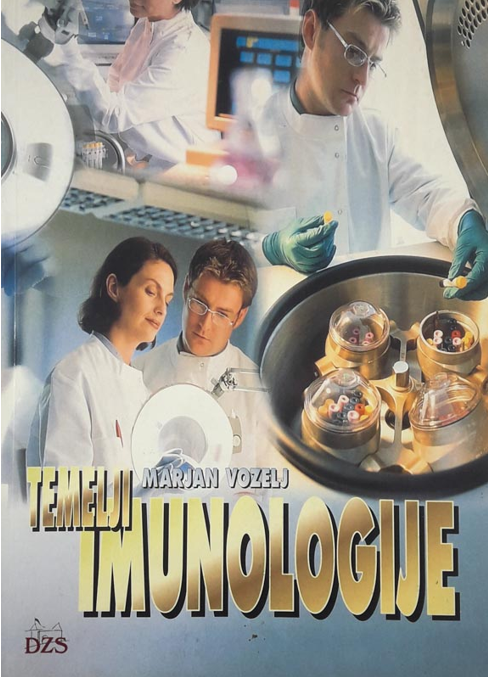
Immunology textbook in the Slovenian language
The Society today
In 2009, Prof. Vladka Čurin Šerbec assumed the presidency and continues to lead the Society today. During this period, the Society has continued to bring together researchers and clinical experts and to foster cooperation with related professional fields and the international immunology community.
Increasing attention has also been devoted to future generations of immunologists. The Society provides young researchers with opportunities to become involved in the professional community, present their research, and establish contacts with colleagues from Slovenia and abroad. Support for young researchers is also reflected in the professional meetings that the Society has dedicated in recent years to young immunologists and to linking basic research with clinical practice.
Fifty years after its founding, the Immunology Society of Slovenia remains a relatively small but professionally highly diverse society. It brings together researchers and clinicians whose interests span different areas of immunology, and this interdisciplinarity remains one of its defining characteristics.
The 50th anniversary is an opportunity to thank all former and current members who, through their knowledge, research and clinical work, and dedication, have helped shape the Immunology Society of Slovenia and the development of immunology in Slovenia—and to look ahead to its next fifty years with the same commitment.